


Key Engineering Considerations for Large-Span Steel Space Frame Structures

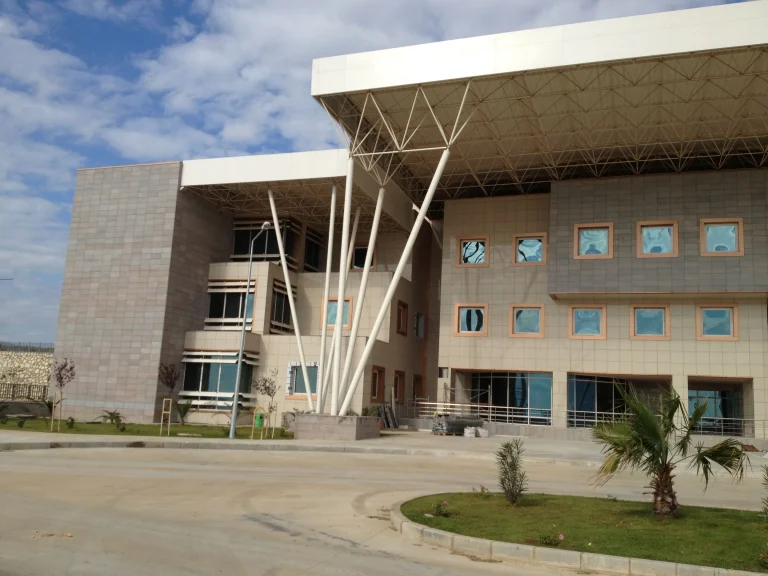
Large-span structures represent some of the most demanding challenges in modern structural engineering. Whether designed for airports, stadiums, shopping malls, or exhibition halls, these projects require careful planning, advanced analysis, and precise execution.
In this article, we outline the key engineering considerations that ensure safety, efficiency, and long-term performance in large-span steel space frame structures.
What Defines a Large-Span Structure?
A structure is generally considered large-span when it covers a significant distance without intermediate columns or supports. In practice, spans exceeding 30–40 meters already require specialized structural systems.
Steel space frame systems are frequently chosen for large-span projects because they offer:
-
Efficient load distribution
-
Lightweight structural behavior
-
High stiffness and redundancy
Structural System Selection
Choosing the right space frame configuration is the foundation of a successful large-span project.
Common System Types
-
Single-layer space frames for medium spans and lighter loads
-
Double-layer space frames for long spans and heavy loading conditions
-
Dome and free-form systems for circular or complex geometries
Each system must be evaluated based on span length, load requirements, and architectural intent.
👉 (Internal link suggestion: link to Single vs. Double-Layer Space Frame Systems article.)
Load Analysis and Structural Behavior
Large-span structures are subjected to a wide range of loads, including:
-
Dead loads (self-weight of the structure)
-
Live loads (maintenance, access, suspended systems)
-
Wind loads
-
Seismic loads (where applicable)
-
Thermal effects
Accurate three-dimensional structural analysis is essential to understand how loads are distributed throughout the space frame and transferred to supports.
Importance of Redundancy
Space frame systems inherently provide structural redundancy, meaning that loads can be redistributed if individual members are overstressed. This characteristic significantly improves overall structural safety.
Span-to-Depth Optimization
One of the key advantages of space frame systems is their ability to achieve long spans with optimized structural depth.
-
Shallow systems may reduce visual impact but increase member forces
-
Deeper systems improve stiffness but require more material
Finding the optimal balance between span, depth, and material efficiency is a critical engineering task.
Connection Design and Detailing
Connections play a vital role in the performance of large-span space frame structures.
Key Considerations
-
Precision of node fabrication
-
Tolerance control during assembly
-
Load transfer efficiency
-
Ease of installation
Poorly detailed connections can compromise structural behavior, even if the global design is sound.
Fabrication and Quality Control
Large-span structures demand high fabrication accuracy to ensure smooth on-site assembly.
Engineering teams must account for:
-
Manufacturing tolerances
-
Modular assembly strategies
Strict quality control during fabrication ensures that members fit correctly and perform as designed.
Installation Planning and Site Conditions
Installation is often the most critical phase of a large-span project.
Installation Methods May Include
-
Ground assembly and lifting
-
Incremental launching
-
Sectional installation with temporary supports
Each method must be carefully evaluated based on site constraints, crane capacity, safety requirements, and project timeline.
Compliance with International Standards
Large-span steel space frame structures must comply with international design codes and standards, such as:
-
EN Eurocodes
-
AISC Steel Construction Manual
Compliance ensures safety, reliability, and regulatory approval across different regions.
Lifecycle Performance and Maintenance
Engineering considerations do not end at project completion. Long-term performance depends on:
-
Corrosion protection systems
-
Accessibility for inspection
-
Planned maintenance strategies
Designing for durability significantly reduces lifecycle costs and ensures consistent performance over decades.
ATRDIM’s Approach to Large-Span Projects
At ATRDIM, large-span steel space frame projects are handled through a fully integrated process:
-
Concept development and structural optimization
-
Detailed engineering and shop drawings
-
Precision fabrication
-
Controlled installation and technical support
Our engineering-led approach ensures that each structure meets technical, architectural, and operational requirements.
Conclusion
Successful large-span steel space frame structures are the result of careful system selection, advanced analysis, precise detailing, and disciplined execution. Addressing these engineering considerations early in the design process is essential to achieving safe, efficient, and durable structures.
By working with experienced engineering teams, project stakeholders can confidently deliver large-span structures that perform reliably throughout their lifecycle.