


Single vs. Double-Layer Space Frame Systems: Which One to Choose?

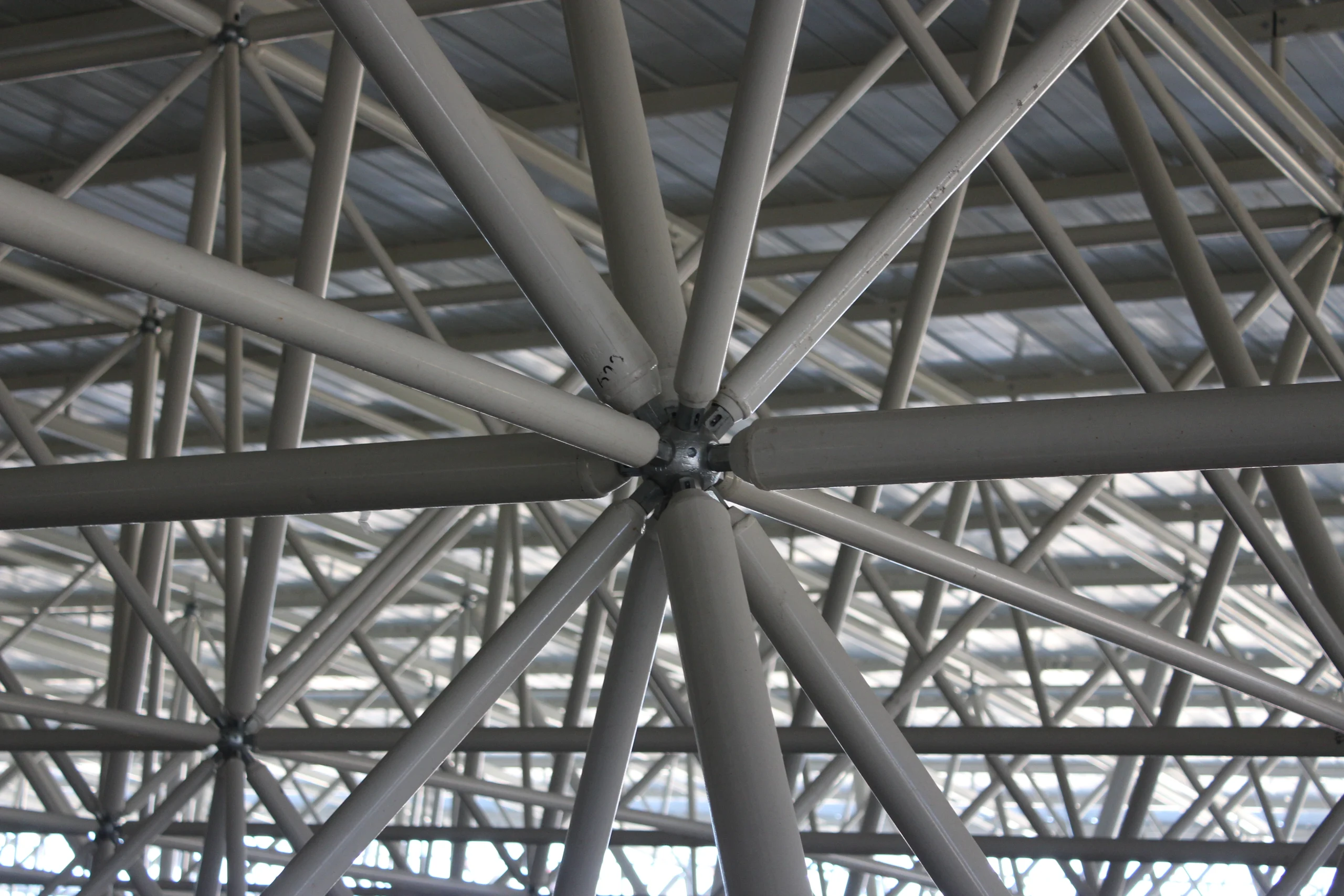
When planning a large-span architectural or industrial structure, selecting the right space frame system is a critical engineering decision. Among the most commonly used configurations, single-layer and double-layer space frame systems offer different structural, economic, and architectural advantages.
In this article, we compare these two systems in detail to help engineers, architects, and project developers choose the most suitable solution for their specific project requirements.
What Is a Space Frame System?
A space frame system is a three-dimensional structural framework composed of interconnected steel members arranged in a geometric pattern. This configuration allows loads to be distributed efficiently in multiple directions, making space frames ideal for large-span, column-free structures.
Space frame systems are widely used in:
-
Airport terminals and skylights
-
Shopping malls and atriums
-
Stadium roofs and exhibition halls
-
Industrial facilities and warehouses
Single-Layer Space Frame Systems
Overview
A single-layer space frame system consists of one structural plane where members are arranged in a flat or slightly curved grid. This system is typically supported by perimeter columns or beams.
Key Advantages
-
Lightweight structural solution
-
Reduced steel consumption
-
Faster fabrication and installation
-
Cost-effective for medium-span projects
-
Clean and minimal architectural appearance
Typical Applications
Single-layer systems are best suited for:
-
Canopies and entrance covers
-
Skylights and atrium roofs
-
Medium-span commercial spaces
-
Architectural features with limited load demands
Limitations
-
Lower load-bearing capacity compared to double-layer systems
-
Limited span capability
-
Less structural redundancy
Double-Layer Space Frame Systems
Overview
A double-layer space frame system consists of two parallel structural layers connected by vertical or diagonal members. This configuration significantly improves stiffness and load distribution.
Key Advantages
-
High load-bearing capacity
-
Excellent structural stability and redundancy
-
Suitable for very large spans
-
Enhanced resistance to dynamic and environmental loads
-
Greater flexibility for complex geometries
Typical Applications
Double-layer systems are ideal for:
-
Stadium and arena roofs
-
Airport terminals
-
Shopping mall domes
-
Exhibition halls and public buildings
-
Industrial structures with heavy load requirements
Structural Performance
Due to their depth and three-dimensional behavior, double-layer systems offer superior performance under:
-
Long-span conditions
-
Wind and seismic loads
-
Heavy roofing and façade systems
Single vs. Double-Layer: Key Comparison
| Criteria | Single-Layer | Double-Layer |
|---|---|---|
| Span Capability | Medium | Large to very large |
| Load Capacity | Moderate | High |
| Structural Depth | Low | Higher |
| Cost | Lower | Higher (but efficient for scale) |
| Installation Speed | Fast | Moderate |
| Architectural Freedom | Moderate | High |
How to Choose the Right System?
Choosing between single-layer and double-layer space frame systems depends on several critical factors:
Span Length
For spans exceeding 40–50 meters, double-layer systems are generally more efficient and structurally reliable.
Load Requirements
Projects with heavy roofing systems, integrated glazing, or suspended equipment benefit from the enhanced strength of double-layer configurations.
Architectural Design
Complex geometries, domes, and landmark structures often require the flexibility and stability provided by double-layer systems.
Budget and Lifecycle Cost
While single-layer systems may offer lower initial costs, double-layer systems often provide better long-term performance and durability, reducing maintenance and reinforcement needs over time.
Engineering Standards and Design Considerations
Both single and double-layer space frame systems must be designed according to international structural standards, such as:
-
EN (European Standards)
-
Project-specific local building codes
Advanced structural analysis, connection detailing, and fabrication tolerances play a crucial role in system performance.
ATRDIM’s Engineering Approach
At ATRDIM, we design and deliver both single-layer and double-layer space frame systems as part of our end-to-end engineering solutions. Our process includes:
-
Structural analysis and system optimization
-
Detailed shop drawings and connection design
-
Precision fabrication
-
On-site installation and technical support
Each system is tailored to the project’s architectural vision, functional requirements, and environmental conditions.

Conclusion
There is no universal answer to whether a single-layer or double-layer space frame system is “better.” The right choice depends on span, load, architectural intent, and long-term performance expectations.
By working with an experienced engineering partner, project stakeholders can ensure that the selected system delivers safety, efficiency, and architectural excellence throughout the structure’s lifecycle.